
 Pecohub
 The United States and Nigeria have moved to deepen bilateral trade and investment relations, with both countries aligning on agriculture, the digital economy and infrastructure as priority sectors under the United States–Nigeria Commercial and Investment Partnership (CIP).
This commitment was reaffirmed yesterday at the United States–Nigeria Commercial and Investment Partnership ministerial meeting held in Lagos, which brought together senior government officials and private sector stakeholders from both countries.
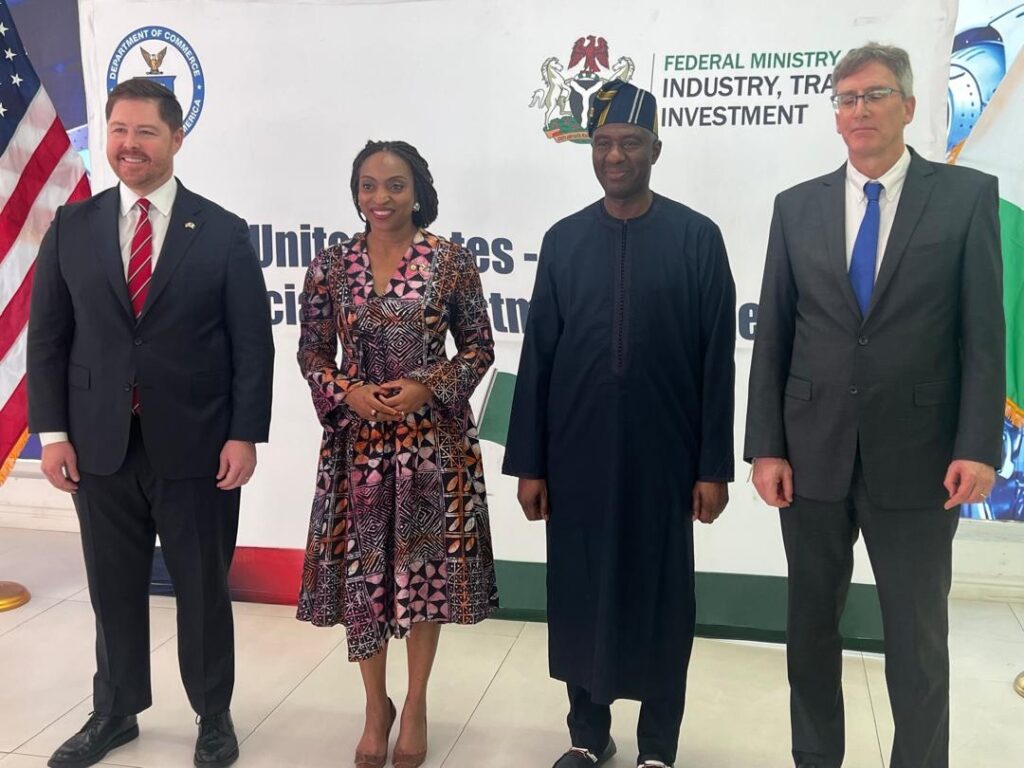
Speaking at the meeting, the Deputy Assistant Secretary for the U.S. Commercial Service at the U.S. Department of Commerce, Bradley McKinney, Minister of Industry, Trade and Investment, Dr. Jumoke Oduwole and the Associate Administrator of the Foreign Agricultural Service at the U.S. Department of Agriculture, Jason Hafemeister reiterated the partnership reflects a deliberate effort by both governments to strengthen two-way trade and investment by acting on recommendations developed jointly with the private sector.
“We are focused on enhancing the two-way trade and investment relationship with Nigeria, and we have worked with the CIP and the working groups to come up with some very productive, common-sense recommendations that both the U.S. and Nigerian governments can follow to execute on that vision.”
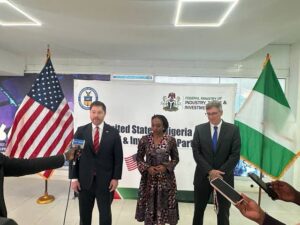
He explained that the selection of agriculture, digital technology and infrastructure as priority sectors was driven largely by private sector input, noting that the working groups identified areas where both economies have comparative strengths and clear commercial opportunities.
“This is a unique chance for the U.S. and Nigerian governments to take recommendations from the U.S. and Nigerian private sectors. So, it was really the private sector’s decision to make those the priority sectors,” he added, stressing that both governments are committed to implementing the recommendations going forward.
“That said, we wholeheartedly agree. These are the areas where we see the most opportunity. The working groups have come up with very thoughtful recommendations to tactically address the trade and investment issues in each of these priority sectors, and we as governments and our teams intend to execute on those recommendations going forward, McKinney said.
On her part, Minister of Industry, Trade and Investment, Dr. Jumoke Oduwole, described the engagement as timely and aligned with the economic reform agenda of President Bola Ahmed Tinubu.
“It’s really a pleasure to welcome such a strong U.S. government delegation to Nigeria,” Oduwole said, noting that Nigerian authorities have maintained close collaboration with U.S. counterparts and the private sector in advancing the Commercial and Investment Partnership.
She said the focus on infrastructure, agriculture and the digital economy reflects areas where both countries are strong and where collaboration can unlock investment, support private businesses and expand Nigeria’s role as a trade hub across Africa.
“These are areas where both economies are strong and are working collaboratively to support our private businesses, to welcome investment into key sectors across Nigeria, and for our businesses to also benefit from trading through Nigeria across the African continent,” she said.
Oduwole noted that Nigerian businesses are seeking greater market access and sustained cooperation in goods and services trade, infrastructure development and technology partnerships, adding that the spirit of the meeting was entrepreneurial and solution driven.
Linking the partnership to the administration’s Renewed Hope Agenda, the minister said diversification of non-oil exports remains a central priority, with the selected sectors aligning naturally with Nigeria’s economic structure and reform trajectory.
She said: “When you look at the renewed hope agenda of President Bola Ahmed Tinubu, you will see, structurally the encouragement of the diversification of non-oil exports of the Nigerian economy. And when private sector came up with these three areas, it aligned so well. When you look at the structure of the Nigerian economy and the US economy, the alignment was a no brainer.
“We are supporting private sector as they scale in services technology. You know the synergy between Nigerian tech ecosystem and the US when you talk about agriculture, the US has been a world leader in agriculture for many years, and Nigeria has prioritised the agriculture sector.
“So, whether from mechanisation, from the entire value chain, that synergy is clear. And then when you just look at all the other areas, infrastructure, this is the promise of this administration.