
 Pecohub
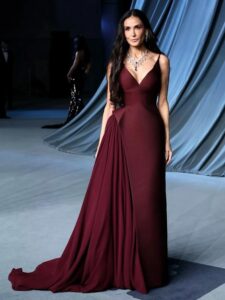
 Demi Moore celebrated turning 63 by saying something many people think, fewer people say, and almost nobody in Hollywood confidently declares in public: aging doesn’t mean fading. It means freedom.
Her message lit up social media, headlines, and comment sections, with reactions that ranged from “preach, queen” to “easy for her to say.” And honestly? Watching the discourse unfold might be the most entertaining part of her birthday.
Aging isn’t decline, it’s Demi 2.0
First, credit where it’s due. Moore didn’t roll out a generic birthday post filled with cake emojis and the usual “grateful for another year.”
Instead, she showed up on The Late Show with Stephen Colbert and dropped a full-on thesis on aging, calling her 60s “one of the most freeing times” of her life. She talked about shedding expectations, embracing honesty, and finally seeing herself beyond what others project onto her, a sentiment she’s repeated in multiple interviews, including her recent viral reflection reported by LiveMint.
To sum it up: this isn’t the Demi Moore who starred in Ghost. This is the Demi Moore who refuses to ghost her own life experience.
A privileged bias or a fair point?
Demi Moore’s take on aging at 63 struck a chord with a lot of people, many of whom said her message felt empowering, comforting and refreshingly honest. But not everyone heard it that way. A portion of fans pushed back, suggesting Moore’s optimism may come from a place most people simply don’t live in, a world where aging is softened by financial security, industry resources and access to top-tier wellness, skincare and medical support.
For these critics, Moore’s message isn’t wrong, but it isn’t universal either. They argue that “aging gracefully” is often presented as a mindset, when in reality it can come with real costs, from healthcare to cosmetic treatments to the time and support required to take care of oneself properly. And while Moore’s perspective is undeniably valid for her, some believe it doesn’t fully capture the challenges the average person faces while navigating their 50s and 60s.
Still, it’s worth noting that Moore’s point wasn’t about perfection. Her reflections emphasized emotional freedom, self-acceptance and shedding outdated expectations — ideas that don’t require money, just perspective. That nuance, however, is easy to lose in a world where beauty standards often feel inseparable from privilege.

Why this debate matters, and why I’m firmly Team Demi
Here’s my take: people aren’t actually arguing about Demi Moore. They’re arguing about themselves. Their fears. Their insecurities. Their hopes for who they’ll become — or who they thought they’d be by now.
Moore isn’t pretending aging is easy. She’s not rewriting biology. She’s simply refusing the idea that life’s richness ends when the candles multiply. And she’s offering something rare: a woman in Hollywood saying she feels more herself now than ever, backed by a year of career highs including major awards recognition for The Substance.
Is that viewpoint influenced by her success? Of course. But it’s also influenced by experience — decades of it.
And frankly, if Moore wants to stand at 63 and say, “Actually, I feel great,” who are we to tell her she doesn’t?
The real reason fans are divided
Because aging is personal and beauty is political. And because the world treats women over 50 like a plot twist. And because Moore’s message hits right at that uncomfortable intersection between aspiration and reality.
Maybe not everyone relates to Demi Moore’s version of 63. That’s fine. Nobody asked her to represent all of us. What she did do is remind people that aging comes with more possibilities than fear, and that perspective — privilege or not — is worth hearing. If her message rattled people, good. It means we’re paying attention. And if anyone’s going to spark a smarter conversation about aging, it might as well be someone who refuses to disappear from it.