
 Pecohub
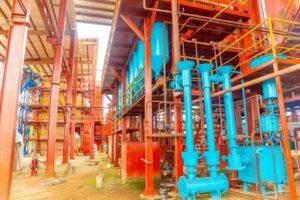
 Nigeria’s long-troubled Ajaokuta Steel Company continues to stand as one of the country’s most expensive industrial failures, with billions of naira spent over several decades without meaningful steel production to justify the investment.
Conceived in the late 1970s as the backbone of Nigeria’s industrialisation drive, the Ajaokuta Steel Complex was designed to power manufacturing, create jobs, and reduce dependence on imported steel.
Instead, the project has become synonymous with policy inconsistency, abandoned contracts, and prolonged political interference.
Successive governments have poured vast public resources into the facility through construction works, rehabilitation contracts, staff salaries, and maintenance costs. Despite these expenditures, the plant has never operated at commercial capacity, leaving Nigeria dependent on imported steel products while a strategic national asset lies largely idle.
Experts attribute the failure of Ajaokuta Steel to a combination of weak political will, contractual disputes with foreign partners, corruption allegations, and the absence of a clear, long-term industrial policy.
Multiple concession attempts, including agreements with foreign firms, collapsed amid legal battles and governance concerns.
In recent years, the Federal Government has reiterated its commitment to reviving Ajaokuta Steel, including renewed discussions on public-private partnerships.
However, scepticism remains high among industry observers who say previous revival pledges failed to translate into concrete outcomes.