
 Pecohub
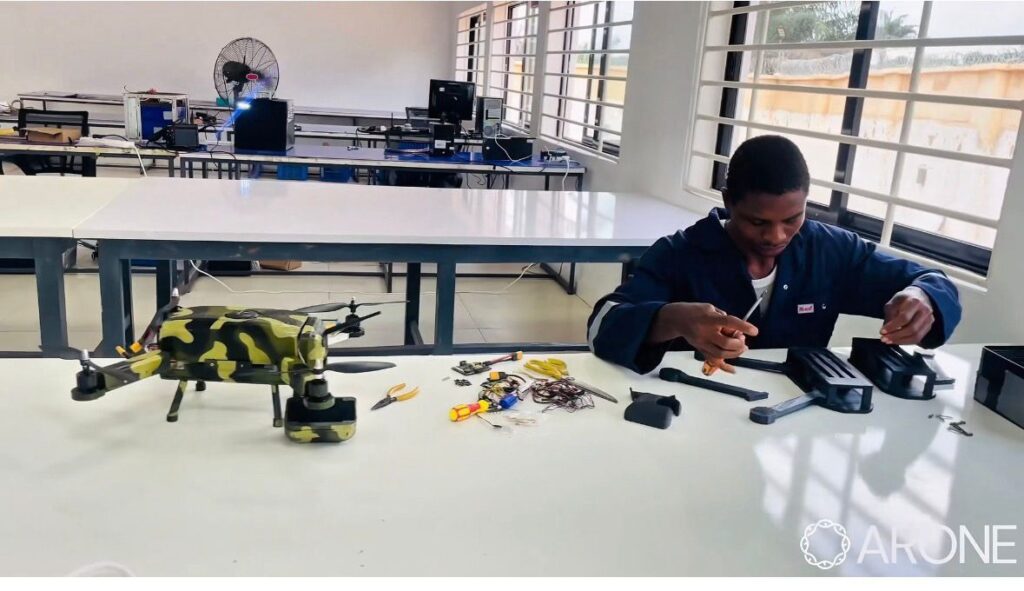
 In a 2,000-square-metre facility in Nsukka, Enugu State, in southeastern Nigeria, engineers assemble airframes, test control systems, and fine-tune battery modules to prove a point: Nigeria can build hard tech.
Arone Technologies, founded in 2018 by AI engineer Emmanuel Ezenwere, is one of the few Nigerian startups attempting to manufacture drones and modular solar energy systems locally. The company is betting on hardware, from autonomous aerial logistics to portable solar systems, built largely in Nigeria.
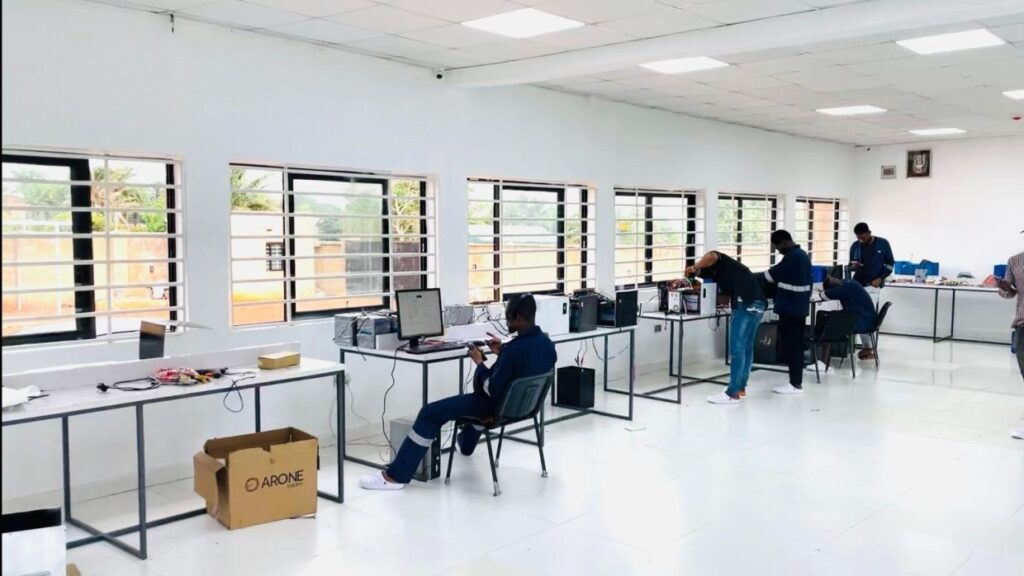
That ambition is set to scale through a ₦12.95 billion ($9.52 million) partnership with the state-owned Institute of Management and Technology (IMT), Enugu. Over the next four years, both partners plan to establish what they describe as Nigeria’s first tech manufacturing plant dedicated to defence, aerospace, robotics, AI, and renewable energy, an entire industrial hub built within the IMT campus.
“We’re building solutions that enable energy security and enable smart living,” Ezenwere told TechCabal in an interview. “Our primary focus is energy security and artificial intelligence.”
Arone was founded “way before AI became sexy,” as Ezenwere puts it. The company’s early mission was practical: solving Nigeria’s last-mile healthcare delivery problem.
Arone’s journey began in 2018 with a ₦3 million ($2,200) grant from Roar Nigeria, the University of Nigeria, Nsukka’s tech hub, alongside a $5,000 angel investment. It later raised a $100,000 seed round from Energia Ventures and AfriClim Accelerator, as well as investments from angel investors.
For a company that once watched its capital evaporate in a drone crash, the ₦12.95 billion ($9.52 million) manufacturing partnership marks a dramatic evolution.
Nigeria has more than 30,000 primary healthcare centres, many located in rural communities with poor road infrastructure.
Deliveries of blood, vaccines, and emergency medication can take hours, sometimes too long.
Arone’s answer was autonomous drones capable of carrying up to 5kg of medical supplies over distances of up to 200 kilometres.
Through a network of “Avports”, autonomous vehicle ports stationed at blood banks and distribution hubs, drones can take off, deliver to remote clinics, and return without human intervention.
A trip that might take one hour and fifteen minutes by road can be completed in about 15 minutes by drone.
The company’s early cargo drone, capable of carrying 20kg, was among the first of its kind in Nigeria. Its maiden flight in 2019 was successful. The next one crashed.
“We were thrilled with the accomplishment,” Ezenwere recalled. “But the reality was that the crash cost was greater than the capital we had raised.”
The setback forced the team to rethink how to build hardware in Nigeria. Instead of chasing perfect, finished products, Arone began breaking systems into manageable modules, refining and iterating gradually. It also pivoted toward niches that could sustain revenue, including security applications.
Today, Arone claims it works with the Nigerian Defence Research and Development Bureau and the Air Force, supplying drones for surveillance and security use cases.