
 Pecohub
 Evangelical leaders in Italy are calling for a full repeal of curbs on religious freedom as the nation marks the 70th anniversary of the lifting of the fascist-era law, which outlawed Pentecostals as contrary to “the physical and psychological integrity of the race.”
Recently, Italian evangelical leaders said that while Buffarini Guidi’s circular had officially been repealed, they were still facing draconian restrictions, because the Catholic Church continued to exercise undue influence over Italian state policy towards Protestants.
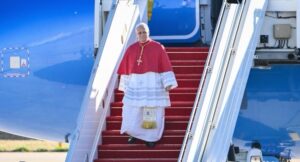
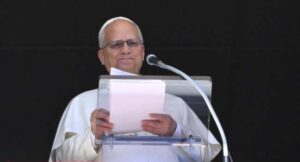
The pastors, who are planting new churches in the predominantly Catholic country, have been paying attention to Pope Leo XIV’s recent remarks on religious freedom, which might help loosen the stringent Mussolini-era restrictions facing them.
Addressing a delegation of Aid to the Church in Need International on Oct. 10, Leo emphasized that religious freedom “is not merely a legal right or a privilege granted to us by governments; it is a foundational condition that makes authentic reconciliation possible.”
“The Catholic Church has always defended religious freedom for all people,” the pontiff said, noting that “the Second Vatican Council in Dignitatis Humanae declared that this right must be recognized in the legal and institutional life of every nation.”
On Oct. 24, the Assemblies of God Church in Naples hosted a ceremony led by its founder-pastor Salvatore Anatasio to commemorate the abolition of the Buffarini Guidi circular. In a historic first, the Prefect of Naples, Michele di Bari, attended the service, along with the Mayor of Naples, Gaetano Manfredi.
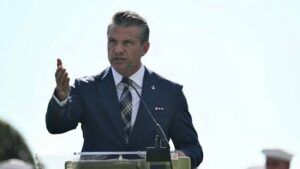
In his sermon, former U.S. Attorney General John David Ashcroft, who was the guest of honor, exhorted the congregation to “true Christian love,” which “does not judge [the past] but offers grace, forgiveness, and renewal, just as Christ did.”
Issued in 1935 by Undersecretary of the Interior Guido Buffarini Guidi, the circular “can, in fact, be considered the culmination of the anti-Protestant cooperation between the Catholic Church and the Fascist government,” explains Italian historian Paolo Zanini.