
Ifeanyi Ugwuanyi’s Appointment Triggers Debate on Political Relevance
 Pecohub
 The recent appointment of former Enugu State governor, Ifeanyi Ugwuanyi, into a diplomatic role has stirred mixed reactions across political circles, with questions emerging over the relevance and intent behind such selections.
Ugwuanyi, who governed Enugu State from 2015 to 2023, is among a list of nominees announced for ambassadorial positions, a move that has reignited public discourse on the nature of political appointments in Nigeria’s foreign service.
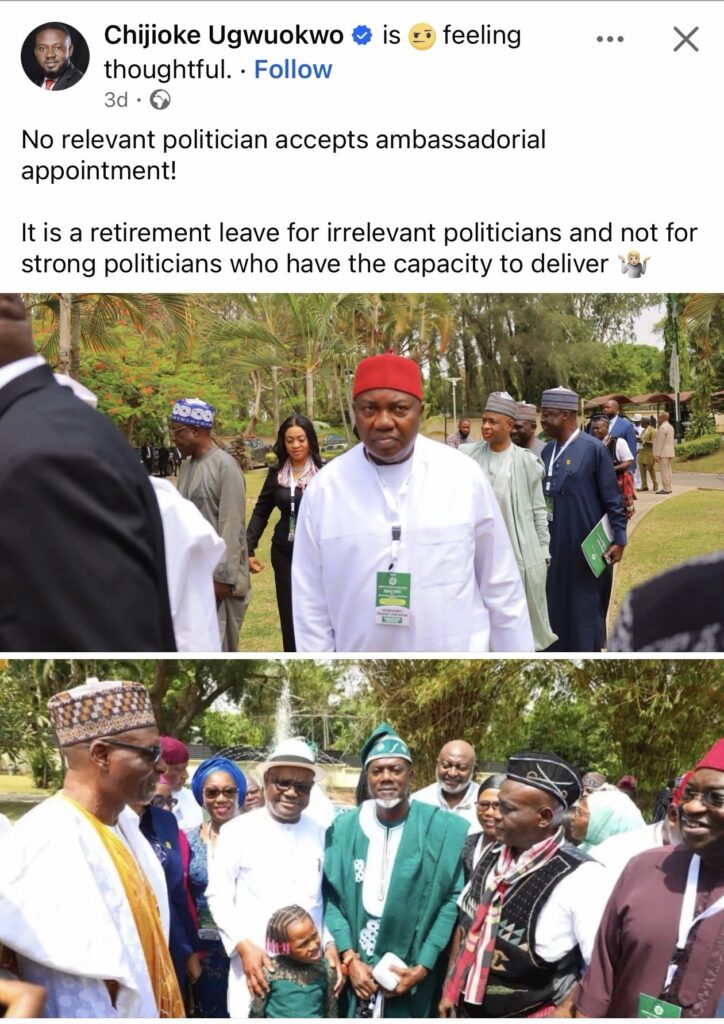
Reacting to the development, a political commentator, Chijioke Ugwuokwo, criticised the trend, describing ambassadorial roles as “retirement avenues” for politicians rather than strategic placements for individuals with proven diplomatic capacity.
His remarks, shared via social media, have gained traction, reflecting a broader sentiment among some observers who argue that such appointments should prioritise competence, global engagement skills, and policy depth.
However, others have defended the decision, noting that former governors often bring governance experience, political networks, and administrative exposure that can be valuable in diplomatic assignments.
The debate highlights a recurring issue in Nigeria’s political ecosystem, the balance between political patronage and merit-based appointments. Analysts say the conversation could intensify as more names emerge and portfolios are assigned.