

 Pecohub
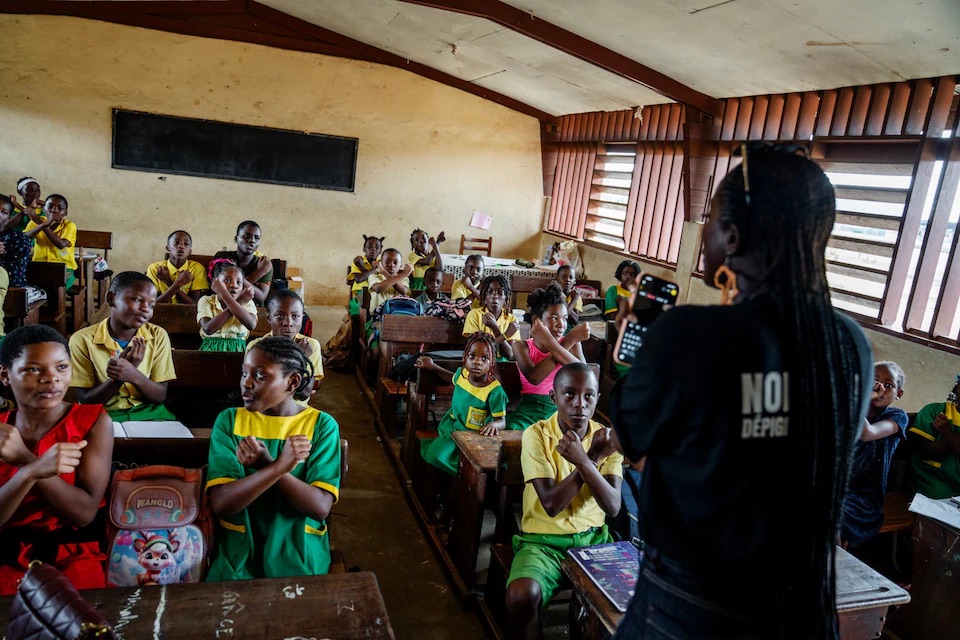
There is a buzz among the pupils at Nzeng-Ayong 2 primary school in Libreville, the capital of Gabon. At least among those who use TikTok. Black Choco is here: social media personality, entrepreneur, and a bona fide celebrity. With the fervour of a revivalist preacher, she takes over the lesson. Today’s topic is kwandza, the Gabonese term for skin-lightening.
“Is kwandza good? No! It’s like pouring boiling water on your skin. And we don’t do that, do we?”
Why do people want to become white, she asks the pupils – boys and girls between eight and 12 – before answering the question herself.
“To please other people! Aren’t you proud of your skin? Our skin is our identity!”
She asks a handful of pupils to stand up. “Look at them! Aren’t they beautiful with their dark skin? Let them hear it!”
“Gloire, you are beautiful,” the whole class chants.
The global market for skin-lightening products is estimated to be worth more than £8 billion and is expected to hit £12 billion by 2030, driven by beauty standards favouring light skin over dark. Women are by far the biggest consumers of the products, but their popularity among men is growing.
“There’s a notion that skin bleaching is an African issue, but it happens all over the world, from India to the Middle East and Japan,” says professor Ncoza Dlova, a dermatologist at the University of KwaZulu-Natal, South Africa, and an expert on skin-lightening products.
Safe, tested lightening products do exist today, she explains, but they are expensive. In low-income countries, including much of Africa, cheap but potentially toxic alternatives dominate instead.
“They are sold in markets everywhere and they contain substances such as corticosteroids, and sometimes even mercury,” says Prof Dlova.
It is easy to find people in Gabon whose skin has been damaged by these products. When Libreville resident Charlene Mavioga was 16, she started going out with older friends.
“They always had such light skin. I wanted to look like them too,” she says.
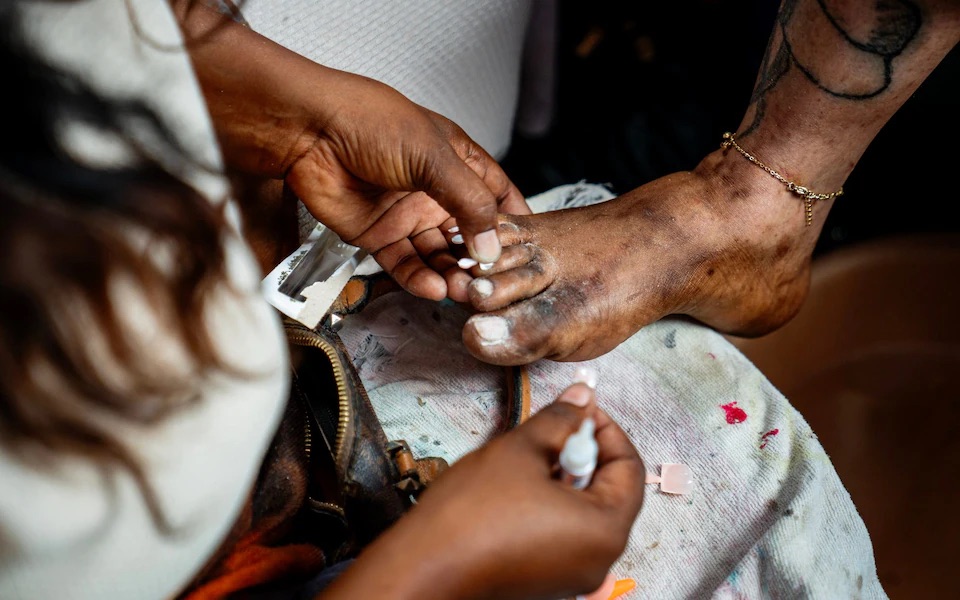
She went to the market, where she found some of the lightening creams her friends had recommended. She started applying them on a daily basis, and after two months her skin began to fade. She received more and more compliments about her complexion.
“I felt pretty, and it encouraged me to carry on.”
But after a few years, she noticed lesions that would not heal. Then the sun began to burn her in a way she had never experienced before. Her skin felt thin and painful.
“I could only go outside after sunset,” she says.
With two young children at the time, life became complicated. But when she stopped using the creams on a doctor’s advice, the symptoms gradually disappeared.
She does not know what was in the cream but across Africa, many products are sold containing substances which are banned in cosmetics in much of the world, and can cause a range of serious side effects.
“I regret it. Today I would never use those products again,” says Mavioga.
In her book Beneath the Surface, A Transnational History of Skin LightenersAmerican historian Lynn M Thomas describes how skin-lightening creams were marketed to black South Africans as a path to beauty and modernity during the early years of apartheid. The products – often made by companies owned by white South Africans – became a commercial success and went on to conquer other parts of the continent.
In the early days of skin lightening creams mercury was the main active ingredient. But sales grew even more in the 1950s when it was discovered that hydroquinone could also lighten the skin. In the United States, where the market was also booming, the civil rights activist Walter White hailed hydroquinone as the end of racism: once everyone was white, he believed, racial prejudice would wither away.
That is not quite what happened. Instead, an epidemic of health problems followed in the creams’ wake. Hydroquinone can cause skin irritation and, with repeated use, can lead to a condition called ochronosis, a potentially permanent blue-black discolouration of the skin.
Mercury is even more toxic: it has been linked to renal and neurological damage, and is particularly harmful to unborn babies. Pregnant women exposed to high levels risk giving birth to babies with low birth weight and have a higher risk of having a baby with intellectual disabilities.
In the 1990s sales boomed again when corticosteroids became one of the standard ingredients. Prolonged use can lead to skin thinning, stretch marks, bruising, persistent redness and sensitivity to light.
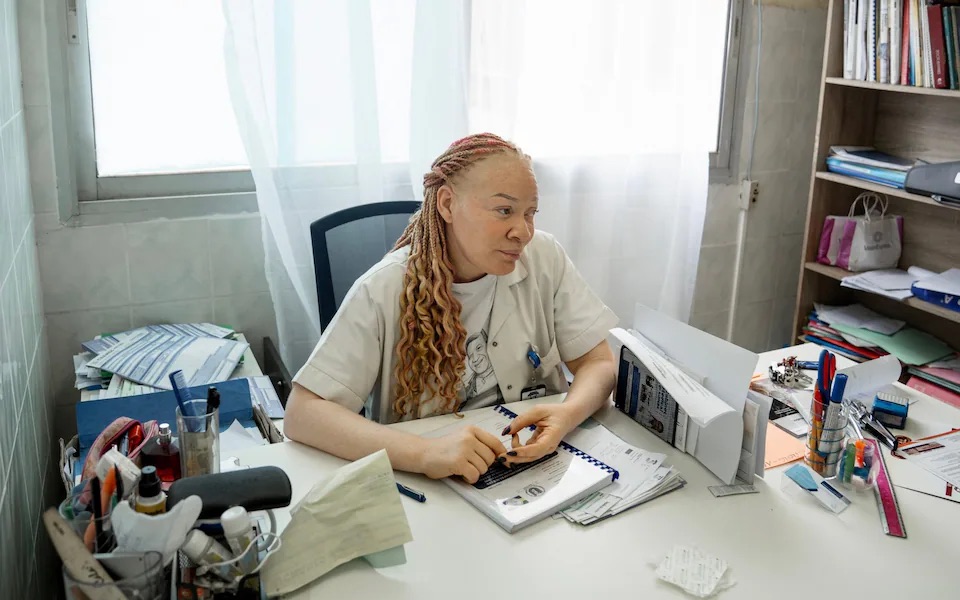
At the university hospital in Libreville, Stéphanie Ntsame Ngoua sees the results of overuse of these products in her packed clinic. She is one of only a handful of dermatologists in Gabon, and patients queue for hours to see her. Between two appointments she has a few minutes to spare but the interview has to be quick.
Many of those who have used the creams come to her because they have discoloured skin with dark patches.
“But treatment for the patches doesn’t always work, the skin can be too damaged. And the treatment is expensive. Many people can’t afford it,” she says.
There are worse side effects too. As the skin’s natural sun protection is reduced, the risk of cancer rises. Doctors sometimes also see signs of mercury damage to the kidneys and nervous system, although this is now less common.
According to Dr Ntsame Ngoua, the most common problems today are caused by corticosteroids.
“We see patients who are admitted to hospital with skin so damaged that infections are hard to treat. Some infections are fatal.”
Dr Ntsame Ngoua has become a prominent voice against skin-lightening. In Gabonese society, she sees two parallel beauty trends. On one side there is the mainstream view where light skin and straight hair are the ideal.
“But I also see quite a few young Gabonese, often educated abroad – hairdressers, stylists and influencers – who are instead embracing their African identity and their naturally dark skin,” she says.
Some of them have decided to take on the skin-lightening industry.
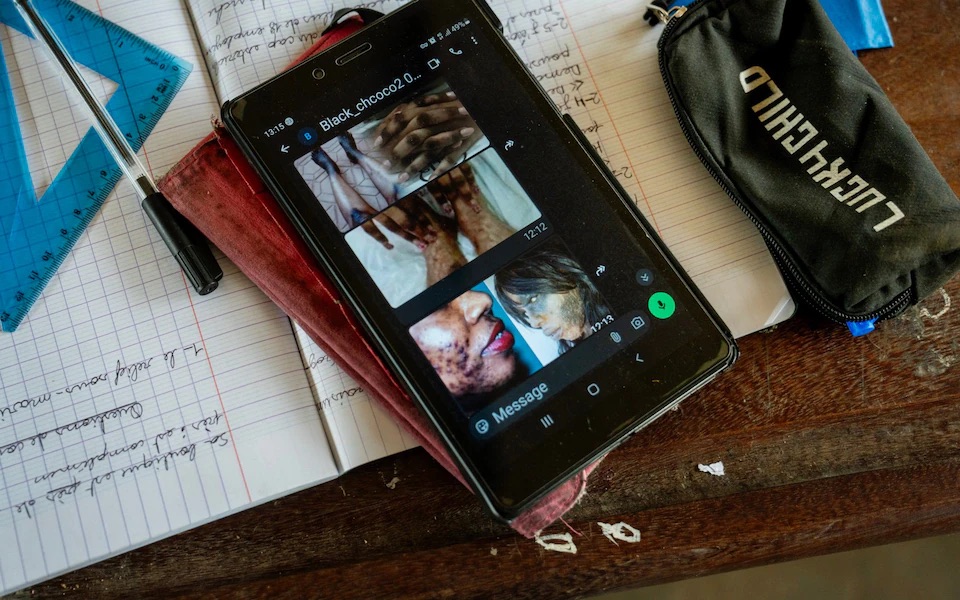
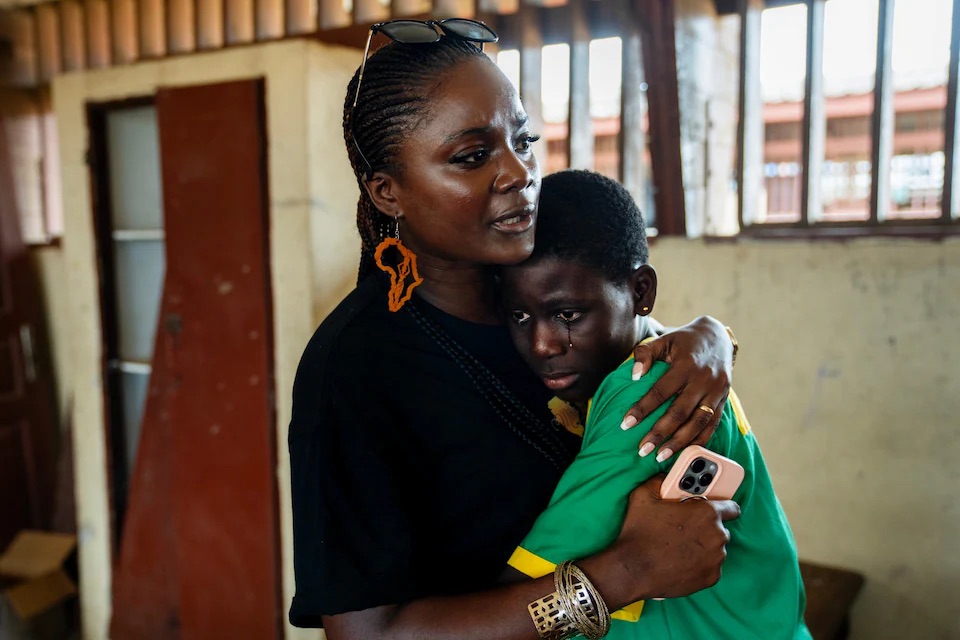
Back at Nzeng-Ayong 2 primary school Black Choco, whose real name is Gadielle Mintsa-Mayi, walks around the classroom holding up a screen showing photographs of people with severe discolouration and skin damage caused by lightening products. She gets the reactions she wants: grimaces and wide eyes.
Then she gets the class to speak with one voice.
“Repeat after me: my skin is not a problem, it is my identity!”
Mintsa-Mayi first became known on social media for her recipes for skincare creams made with natural ingredients. When she later began selling her own skincare online, customers asked her for products to repair skin damaged from lightening products. She knew that she would be unable to help them.
“But I realised I had to get involved and fight against skin-lightening,” she says.
Simply warning about the creams is not enough to break the pattern, she says. Instead, accepted beauty standards need to change.
“If you tell a woman not to use a certain product, you also have to teach her to love her own skin first.”
With the support of the country’s First Lady, Zita Oligui Nguema, Mintsa-Mayi founded the Miss Ébène Gabon beauty pageant as a way of challenging prevailing beauty norms and celebrating naturally dark skin. The event, which tours the country, has attracted wide attention. But visiting schools and talking to children about beauty and skin is just as important, she believes.
“Being proud of your dark skin is about not betraying yourself, about embracing who we are and the culture we belong to,” says Mintsa-Mayi.
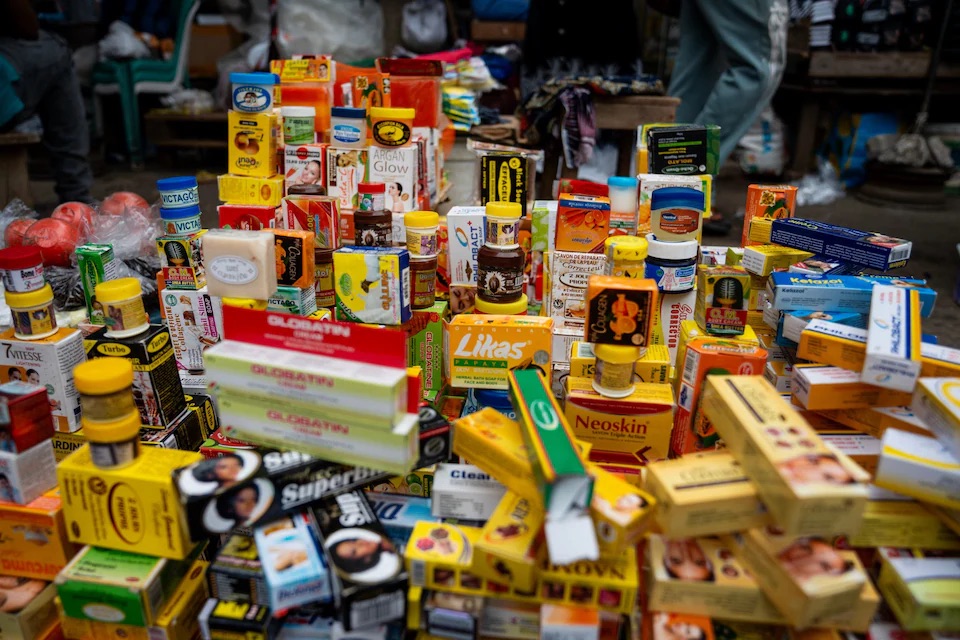
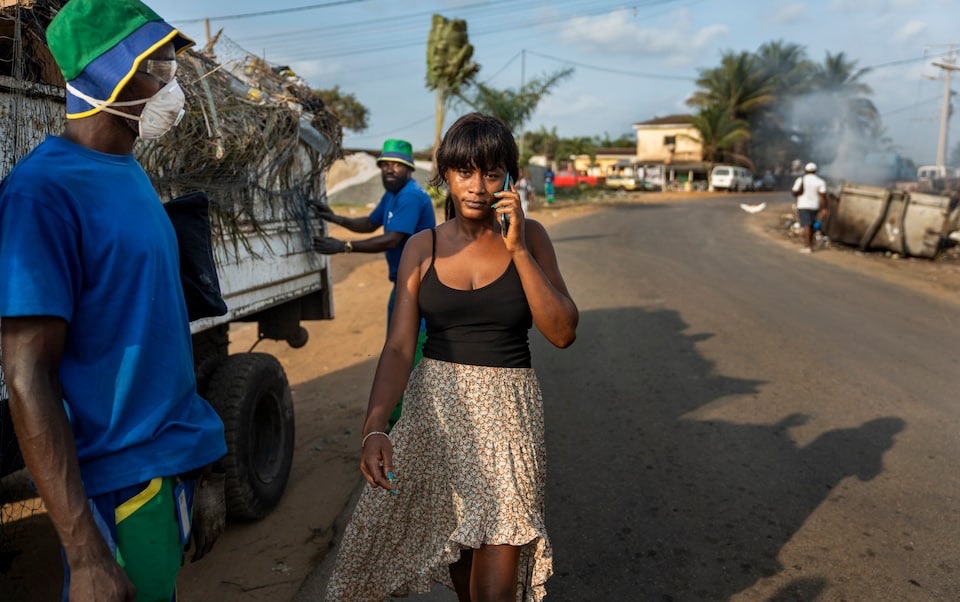
After the school visit, she and her friend, the television presenter Tressy Medza Me Ndong, take The Telegraph to two of Libreville’s markets to see skin-lightening creams on sale. In 2023 the authorities banned a number of products containing mercury and other potentially harmful substances, many of them made in countries such as Cameroon, the Democratic Republic of Congo and Nigeria. But the creams are still being sold, just more discreetly.
One seller, who does not want to give his name, says inspections take place a couple of times a year. The last time they came, he had already taken the banned creams off the shelves. However, Tressy Medza Me Ndong spots at least one cream from the banned list, containing high levels of hydroquinone.
Source: Telegraph