
 Pecohub
 The Federal Government has announced plans to rely more on domestic resources as part of efforts to reduce its dependence on borrowing and strengthen fiscal sustainability.
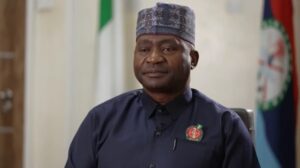
The Minister of Finance and Coordinating Minister of the Economy, Mr Wale Edun, disclosed this on Tuesday during a Bloomberg Television interview at the World Economic Forum (WEF) in Davos, Switzerland.
Edun stressed the need for the government to prioritise revenue generation and domestic resource mobilisation to support economic reforms and long-term growth.
“The issue now is to focus on revenue, focus on domestic resource mobilization,” he said.
He added: “We’re hoping to rely less on borrowing.”
According to the minister, while Nigeria still has access to international bond markets if needed, the government’s main focus is on harnessing its own resources to finance development.
Edun explained that the shift in strategy comes as the country implements wide-ranging fiscal reforms aimed at strengthening the economy amid mounting global economic pressures.
He outlined ongoing efforts to raise tax revenue, improve revenue collection, and ensure fiscal sustainability, noting that these measures are designed to reduce borrowing while expanding government income.
The minister also reiterated that Nigeria remains open to international capital markets if necessary, but emphasised that domestic reforms are central to the government’s fiscal policy.
Since assuming office in 2023, President Bola Tinubu’s administration has rolled out several economic reforms to drive growth and stabilise public finances. These include the removal of currency restrictions, the elimination of the fuel subsidy, and a comprehensive overhaul of the nation’s tax framework.
The tax reforms, according to government projections, are expected to raise revenue to about 18 per cent of Gross Domestic Product (GDP) next year, up from roughly 14 per cent currently, as part of efforts to reduce reliance on external debt and promote long-term economic sustainability.
Economic forecasts suggest that Nigeria’s reforms are beginning to yield positive results. The International Monetary Fund (IMF) recently upgraded Nigeria’s growth forecast to 4.4 per cent for 2026, from an estimated 4.2 per cent in 2025, despite weaker global oil prices.
Edun is expected to use the WEF Annual Meetings in Davos to address investor concerns over policy consistency, inflation, foreign exchange stability and fiscal sustainability.
Nigeria’s engagement at WEF 2026 is shaped by broader global realities affecting emerging markets, with the country set to debut its first-ever official national pavilion, Nigeria House Davos, at the 56th Annual Meeting of the World Economic Forum.
The minister had earlier indicated that interest rate cuts could come soon if inflation continues to ease, a move that could lower debt-servicing costs and reduce pressure on Nigeria’s public finances. He made the remarks during an interview on the sidelines of the Abu Dhabi Sustainability Week.