

Dilapidated Kaduna PHC Leaves Patients, Health Workers Struggling for Care
 Pecohub
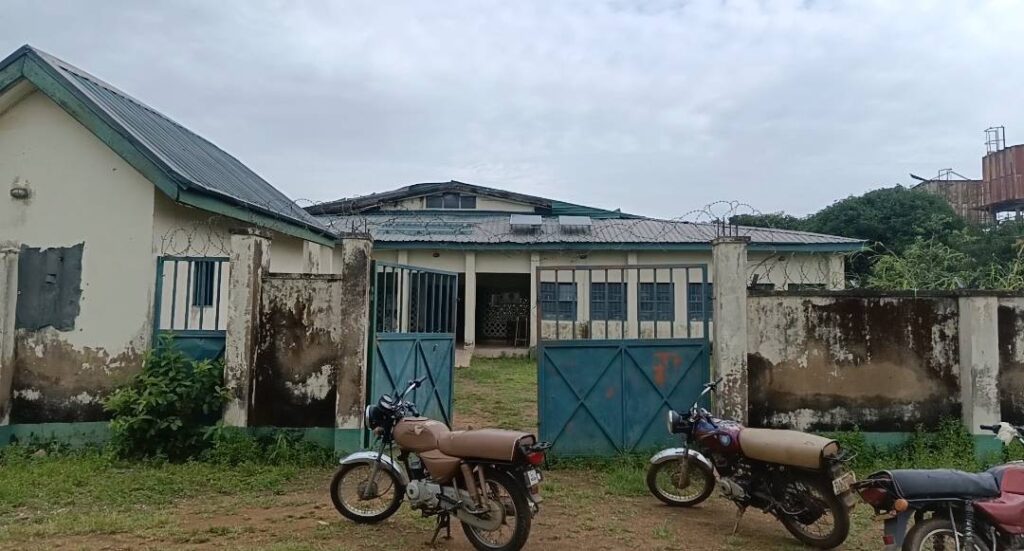
 The Model Primary Health Centre in Kidugu, Bital Ward, Kauru Local Government Area of Kaduna State, is struggling to provide healthcare despite serving nearly 20 communities.
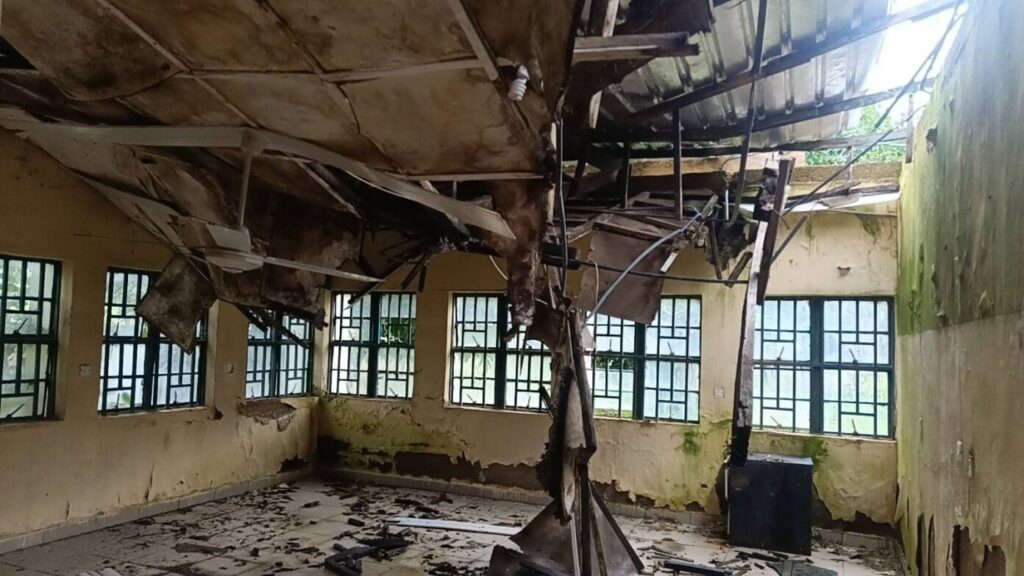
Once established as a model facility, the PHC has deteriorated significantly, with a partially damaged roof, cracked walls, fallen ceilings and abandoned medical equipment. Some healthcare services have been moved into the staff quarters because parts of the main building are no longer suitable for use.
For Esther Samaila, a volunteer worker at the centre, the condition of the facility carries a personal cost. She recalled that in 2021, while caring for her sick husband at the PHC, a violent wind tore off part of the roof.
She said the poor condition of the roads connecting Bital Ward to other parts of the state made it impossible to transfer her husband to another hospital. The journey to Kauru, the local government headquarters, is more than 80 kilometres, according to her account.
“My husband’s condition got worse days later, and he died,” Samaila told reporters.
Expectant mothers interviewed at the facility also described the environment as discouraging.
Rebecca Yunusa said she was surprised by the condition of the centre despite finding healthcare workers there. She said she would not continue her antenatal care at the facility.
Another expectant mother, Rifkatu Danlami, said she had decided against returning for treatment after experiencing rainfall at the centre, where patients and workers were left without adequate shelter.
Patient numbers fall
The PHC was established in 2004 to provide healthcare to communities within its catchment area. Its officer-in-charge, Hussaini Garba, said the centre previously attended to more than 500 people monthly.
That number has since fallen to fewer than 200 patients a month, which Garba attributed to the condition of the facility. Six other workers are on the government payroll, while volunteers receive stipends from revenue generated by the centre.
Despite the deterioration, the facility continues to provide services, particularly to pregnant women and children. The ICIR also found vaccination kits, injections and vaccine-cooling equipment at the centre.
The Ward Development Committee said it had repeatedly appealed to both the state and local governments for renovation. Its chairman, Aliyu Amodu, said officials had inspected the facility and received photographs and videos documenting its condition, but no renovation had followed.
Government responsibility disputed
The condition of Kidugu PHC has also exposed disagreements between Kaduna State officials and the Kauru Local Government.
Kauru Local Government Chairman Bashir Dawaki said in December 2025 that work on the facility was “in process.” However, when contacted again in July 2026, he acknowledged that the PHC had still not been repaired.
Dawaki said the local government had several health centres requiring intervention and that projects were being handled in phases according to available funds.
Kaduna State Commissioner for Health Umma Ahmed, however, criticised the LGA leadership over the condition of its health facilities. She said the state had made 190 of its 255 ward-level PHCs functional, with some of the remaining facilities located in areas affected by insecurity.
Dawaki did not respond to further calls and messages seeking his response to the commissioner’s allegations.
Wider infrastructure crisis
The healthcare crisis in Kidugu is compounded by poor roads and other infrastructure problems.
The communities served by the PHC include Kidugu, Kurama, Binawa, Surubu, Dingi, Kono, Rishuwa, Kuzamani, Bikai, Kiwollo, Kaibi, Kitimi, Ruruma, Rummaiya, Hausawa, Fulani, Amawa, Siyawa, Fijima and Chawai.
Residents also face insecurity, limited access to electricity and inadequate water infrastructure. The ICIR reported that the main bridge linking Kauru Local Government with other parts of Kaduna State has been collapsed since 2019.
For residents unable to use Kidugu PHC, Kauru General Hospital is about 90 kilometres away, according to the Ward Development Committee.
The case illustrates how the effectiveness of primary healthcare depends not only on medical personnel but also on functioning buildings, equipment, roads and basic infrastructure.
For the residents of Bital Ward, however, the immediate concern remains straightforward: keeping the only PHC serving their communities functional and accessible.
Kidugu Model PHC was established in2004 to enable residents within its catchment area to access healthcare. That goal is currently unachievable.
Its challenges appear to have been further worsened by the lack of communication between the Local Government Chairman, Bashir Dawaki, and the State Commissioner for Health in Kaduna, Umma Ahmed.
Ahmed, the commissioner, told reporters that Dawaki, who has been the LGA’s chairman for nearly 10 years, no longer answers her calls. She accused him of neglecting his people and failing to provide needed amenities.
The LGA chairman declined to respond to the claims.
Nestled within a ring of rocks, communities in Bital Ward battle not only a lack of access to healthcare but also insecurity and the near-total absence of basic amenities.
For instance, nine men were abducted from the Rishuwa, Kidugu’s neighbouring community, on December 30, 2025. According to James Rishuwa, a native of the community, the kidnappers demanded a ransom of ₦70 million. Although the victims’ families paid ₦20 million, the gunmen killed four of the abducted youths, released three who were ill, and have continued to hold the remaining two captives.
Rishuwa said many residents had fled the community.
As residents grapple with insecurity and the absence of basic amenities, many say they also struggle to access safe water, relying on sparsely dug hand‑pump boreholes and living without grid electricity.
Infrastructure has collapsed too. The main bridge linking Kauru LGA to the rest of Kaduna State has been collapsed since 2019, claiming the lives of residents who attempted to cross.

We’re tired of complaining – Officer-in-charge, Kidugu PHC
Every year’s rainfall compounds the challenges faced by the Kidugu PHC. The walls and few pieces of furniture still in use at the PHC are soaked during the rainy season, while the dry season leaves them covered in layers of dust.
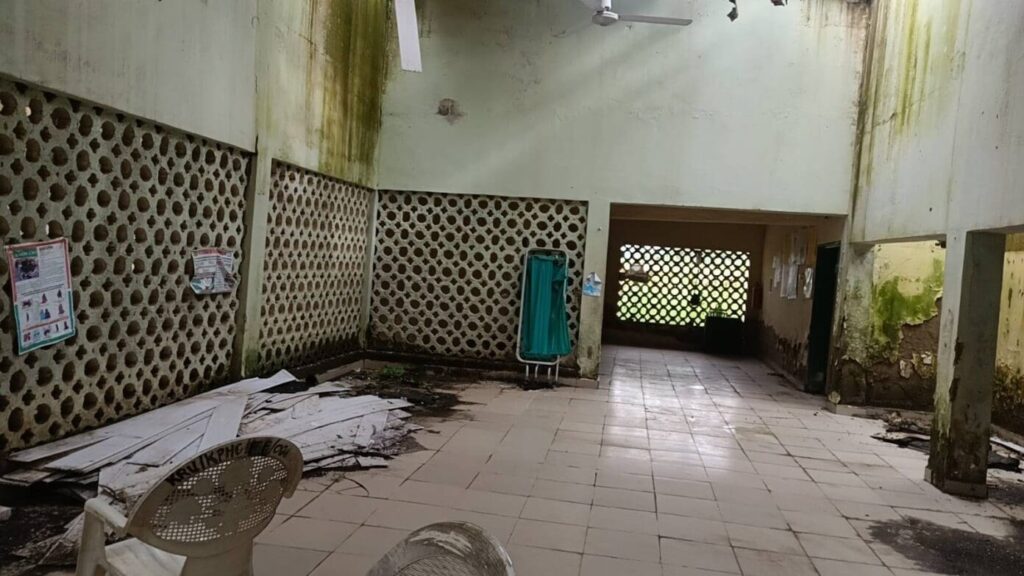
The facility’s walls have cracks, raising serious concerns about the safety of patients, health workers, and other users. There are also abandoned beds, wheelchairs, medical kits and furniture. Workers at the PHC, however, continue to render services to scores of patients, mostly pregnant women and children who have no alternative healthcare services.
Officer in charge of the PHC, Hussaini Garba, decried the state of the centre and said the Kauru Local Government and the state government are in the best position to renovate the centre. According to him, stakeholders, including himself and the Ward Development Committee’s Chairman, have made several efforts to convince both arms of government to renovate the PHC.
Garba was posted to the facility in 2021 and took over leadership in 2023.
“When I came to the PHC, we were rendering services to over 500 people monthly, but now, we no longer attend to more than 200 monthly,” he said.
Garba and six other workers are on the government payroll. He, however, said volunteers are paid from revenues made from the PHC.
Government doesn’t listen to us – WDC Chairman
Aliyu Amodu, the Chairman of the Ward Development Committee, which supports the facility and ensures it performs optimally, complains bitterly about its neglect. He said all appeals by stakeholders, including his committee, to convince both the state and local government to renovate the facility had been futile.
“I have written to the Local Government Chairman. We made videos and took photos and sent them to the Local Government Chairman and to the state. They’ve been coming for inspection. Every time, they come and check everything. Yet, nothing has been done. We are pleading with the state government to come to our aid and make sure that this place functions.”
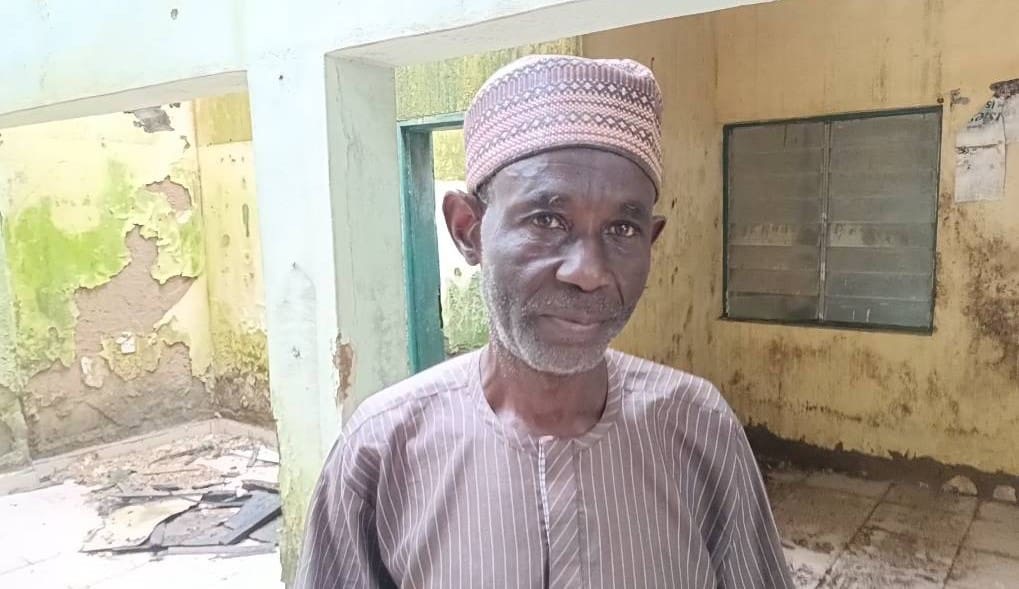
He said if the state government could not renovate the facility, the state government should at least support.
“It’s the only PHC serving nearly 20 communities. Despite being dilapidated, the people are still using it for maternal care, vaccination, and other medical services. Apart from this place, you can only transfer patients to Kauru General Hospital, which is about 90 kilometres,” he stated.
He explained that another building originally meant for staff accommodation had been converted to support the PHC’s services.
Vaccination kits kept in unsafe facility
This reporter saw vaccination kits, including boxes, injections and vaccine cooling devices, at the dilapidated building.
Based on safe vaccine handling by the World Health Organisation, the conditions of vaccines and related kits in Kidugu PHC make them vulnerable to contamination.
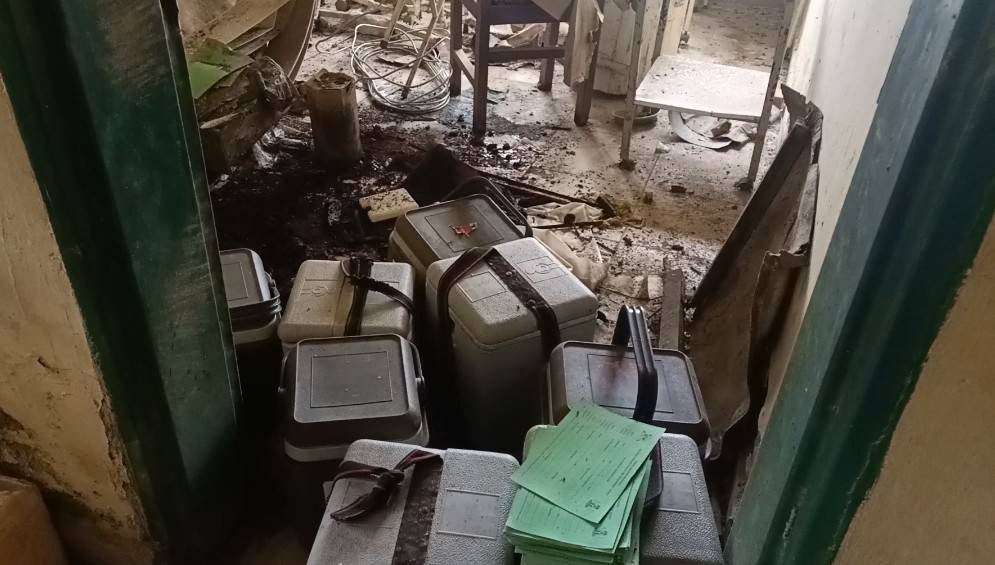
Visual and pictorial evidence shows that the officer-in-charge still has his office in the building. Several other pieces of equipment still in use, including a fridge, furniture, and chairs, were seen in the facility in October 2025, when the reporter visited the PHC. As of August 2026, findings reveal the situation remains the same.
Reports says that communities that could use the PHC include Kurama, Binawa, Surubu, Dingi, Kono, Kinugu, Rishuwa, Kuzamani, Bikai, Kiwollo, Kaibi, Kitimi, Ruruma, Rummaiya, Hausawa, Fulani, Amawa, Siyawa, Fijima, and Chawai.
Nigeria’s persistent deplorable PHCs, rising maternal, child deaths
Nigeria currently parades some of the worst data on maternal and child health globally. WHO’s data shows that Nigeria’s maternal mortality rate stands at 1000/100,000, meaning that one woman out of 100 dies while giving birth.
In 2023, a WHO report ranked Nigeria as the country with the second-highest number of maternal, neonatal and child deaths worldwide.
In the country, the under-five mortality rate stands at 110 deaths per 1,000 live births. The infant mortality rate is 63 per 1,000 live births, while neonatal mortality is 41 per 1,000 live births, according to the 2023–24 Nigeria Demographic and Health Survey (NDHS).