
National Assembly Moves to Digitise Legislative Records, Translate Laws Into Local Languages
 Pecohub
 The story unfolding at the National Assembly Library this week is no longer simply about books, shelves and archived documents.
It is becoming a wider conversation about how Nigeria remembers its legislative past, how lawmakers access information in the present and how ordinary citizens will understand the laws that shape their lives in the years ahead.
That conversation took centre stage on Monday, September 28 as the National Assembly Library opened its 2026 Library Week in Abuja under the theme, “Parliamentary Memory: Connecting Records, Legislation and the People.” What began as a programme designed to expose legislators, legislative aides and parliamentary staff to the enormous resources of the National Assembly Library has, within the first days, opened a much bigger discussion about digital access, the preservation of legislative records and the relationship between Parliament and the people.
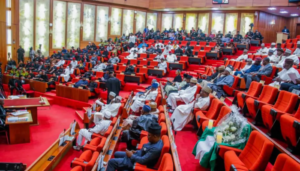
The opening was formally declared by the President of the Senate, Senator Godswill Akpabio, represented by Senator Osita Ngwu, while the Speaker of the House of Representatives, Rt. Hon. Abbas Tajudeen, was represented by the House Leader, Prof. Julius Ihonvbere. The gathering brought together lawmakers, parliamentary officials, diplomats, academics and other stakeholders around a subject that is rarely placed at the centre of public debate but is fundamental to the workings of any legislature: reliable institutional memory.
For the Executive Secretary of the National Assembly Library Trust Fund, Rt. Hon. Henry Nwawuba, the library is much more than a physical collection of publications. He has positioned it as the knowledge infrastructure of the legislature and a repository of the records through which Nigeria’s democratic and legislative journey can be understood.
His message has been consistent without institutional memory, every generation risks beginning again. With properly preserved records, however, one administration can build on the work of another instead of losing valuable knowledge to time.
That philosophy is now being translated into concrete initiatives. Nwawuba disclosed that the National Assembly Library is deepening the digitisation of parliamentary records while upgrading its electronic library and working towards a mobile application that would make legislative information easier to access. The planned digital infrastructure is expected to provide access to authoritative materials such as Order Papers, Votes and Proceedings, committee reports, Acts passed by the National Assembly, gazetted laws and oversight manuals.
Perhaps one of the most striking announcements from the week is the plan to make Nigerian legislation available in indigenous languages, including Hausa, Yoruba and Igbo. The objective, according to Nwawuba, is to take legislative information beyond the traditional users of parliamentary documents and make it easier for more Nigerians to understand laws that affect their everyday lives.
The Library is also working on a Bills Tracker, which will allow users to follow the movement of Bills through the legislative process. Alongside this, it is developing infographics, audiovisual materials and video explainers intended to simplify Bills, Acts and legislative procedures for the wider public. These measures place the Library at the intersection of parliamentary research, technology and public information at a time when access to verified information has become increasingly important.
The question of trust has equally featured prominently in the discussions. Clerk to the National Assembly, Kamoru Ogunlana, warned of the dangers posed by incomplete, outdated, altered or unauthorised legislative documents circulating as though they were official records. He argued that as parliamentary records become increasingly digitised, systems must be capable not only of making information accessible but also of preserving their authenticity and traceability.
That concern gives particular meaning to this year’s theme. Parliamentary memory is not simply about preserving yesterday’s documents; it is about ensuring that the records from which laws, policies and institutional decisions are understood remain accurate, accessible and trustworthy. The issue has become even more significant in an information environment shaped by misinformation, disinformation and rapidly developing artificial intelligence technologies. Senator Osita Ngwu, representing the Senate President at the opening, urged lawmakers to make greater use of the Library’s resources in confronting these challenges.