

Police Chief Urges Global Alliance Against AI-Enabled Criminal Networks
 Pecohub
 Inspector General of Police (IGP) Olatunji Rilwan Disu has called for deeper international police cooperation to counter growing security threats driven by artificial intelligence (AI) and other emerging technologies.
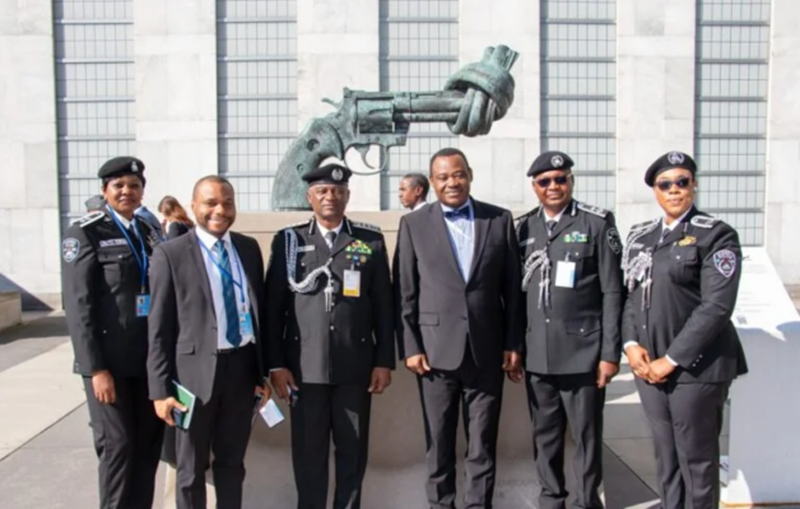
Disu made the call while representing Nigeria at the fifth United Nations Chiefs of Police Summit (UNCOPS 2026), held at the UN Headquarters in New York from July 7 to 8.
The summit brought together ministers, police chiefs and senior officials from regional and international policing bodies to discuss stronger collaboration between national police services and UN policing structures.
Speaking at the summit, Disu said criminal networks were increasingly using AI, encrypted communications and other cyber-enabled tools to carry out cross-border crimes with growing sophistication.
He said these threats were straining conventional policing methods and required a coordinated global response built on innovation, intelligence sharing and strategic partnerships.
The IGP said technology was a powerful policing tool, citing AI, digital forensics, geospatial intelligence and data analytics as key resources. He added that its use must be guided by transparency, accountability, respect for human rights and the rule of law.
“Public trust remains the cornerstone of effective policing,” Disu said, adding that technological innovation should strengthen, not weaken, the relationship between police and the communities they serve.
He also called for greater international support for capacity building and fairer distribution of digital policing resources, saying the benefits of emerging technologies should not be limited to a few advanced countries but extended to all UN member states.
Global police leaders at the summit also shared strategies on terrorism, cybercrime, organised crime and other cross-border threats, with Nigeria’s participation reflecting the Police’s continuing efforts, under Disu’s leadership, to align with best practices and strengthen international security partnerships.
Meanwhile, Nigeria has ranked first in Africa and 38th globally on the second edition of the Global Index on Responsible AI (GIRAI), scoring 45.93, according to the Global Center on AI Governance.
The country rose 42 places from its 2024 ranking of 80th, when it scored 7.21. Egypt ranked second in Africa.
The Index, which assesses countries on inclusion and diversity, ethics and sustainability, labour and skills, trust and safety, and AI use in public service, also recognised Nigeria as a global “Bright Spot” for advancing AI literacy while strengthening protections for children, citing the National Artificial Intelligence Strategy and the 3 Million Technical Talent (3MTT) programme.
Minister of Communications, Innovation and Digital Economy, Dr Bosun Tijani, said the recognition reflected Nigeria’s efforts to build an inclusive and responsible AI ecosystem.