
Honda Pulls Out of South Korea Auto Market
 Pecohub
 Honda Korea will withdraw from the South Korean automotive market at the end of this year, marking 23 years since the company began its automotive business in Korea. However, it will retain its motorcycle business.
Lee Ji-hong, CEO of Honda Korea, held an emergency press conference at COEX in Seoul’s Gangnam-gu on the 23rd and announced, “Considering changes in the global and South Korean market environments, we will end our automotive sales business in the South Korean market as of the end of this year.”
The decision was made at a meeting held at the Japanese headquarters the previous day, attended by executives including Lee. However, even after the cessation of automotive sales, the company will continue after-sales services (A/S), including vehicle maintenance, management, and parts supply, for at least eight years, the legally mandated period.
The motorcycle business will continue to be strengthened. Lee stated, “We will focus the company’s capabilities even more on motorcycles, our core business sector, and continue to expand our product strength and customer service.” Honda Korea sold approximately 43,000 motorcycles during the fiscal year from April 2025 to March 2026, maintaining a market share of nearly 40% in the domestic two-wheeled vehicle market.
Honda, Japan’s second-largest automaker, established a subsidiary in South Korea in 2001 and began selling large motorcycles with engines over 125cc. Starting in 2003, the company changed its name to ‘Honda Korea’ and entered the automotive market in earnest, selling best-selling models such as the Accord and CR-V. In 2008, it became the first imported car brand to surpass annual sales of 10,000 units, recording the top spot in imported car sales.
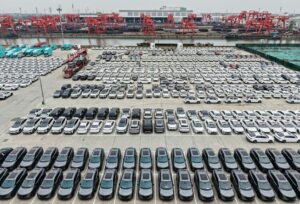
However, amid the ongoing offensive from Chinese automakers such as BYD and Tesla, Honda Korea has faced difficulties in securing profitability due to factors like the impact of high exchange rates. Last year, Honda Korea’s domestic sales dropped sharply by 22% compared to the previous year, totaling 1,951 units.
Lee explained, “Since all vehicles sold domestically are produced in the U.S., the strong dollar had a significant impact.” He added, “Although we consistently pursued cost reductions and changes in lineup composition, we decided to halt sales due to the judgment that medium- to long-term difficulties could be substantial.”
Honda in Japan also recorded a deficit last fiscal year due to factors such as the electric vehicle (EV) chasm (a temporary stagnation in demand). Earlier this year, the company announced the suspension of development for three new EV models—the Honda Zero Salon, Honda Zero SUV, and Acura RSX—as well as the discontinuation of its joint venture with Sony.