

China Develops Tool Capable of Cutting Undersea Cables at Extreme Depths
 Pecohub
 Trial described as bridging ‘last mile’ from deep-sea equipment development to engineering application, suggesting deployment is coming next
A Chinese deep-sea mission has successfully tested an advanced device capable of cutting through underwater structures such as submarine cable at a depth of thousands of metres.
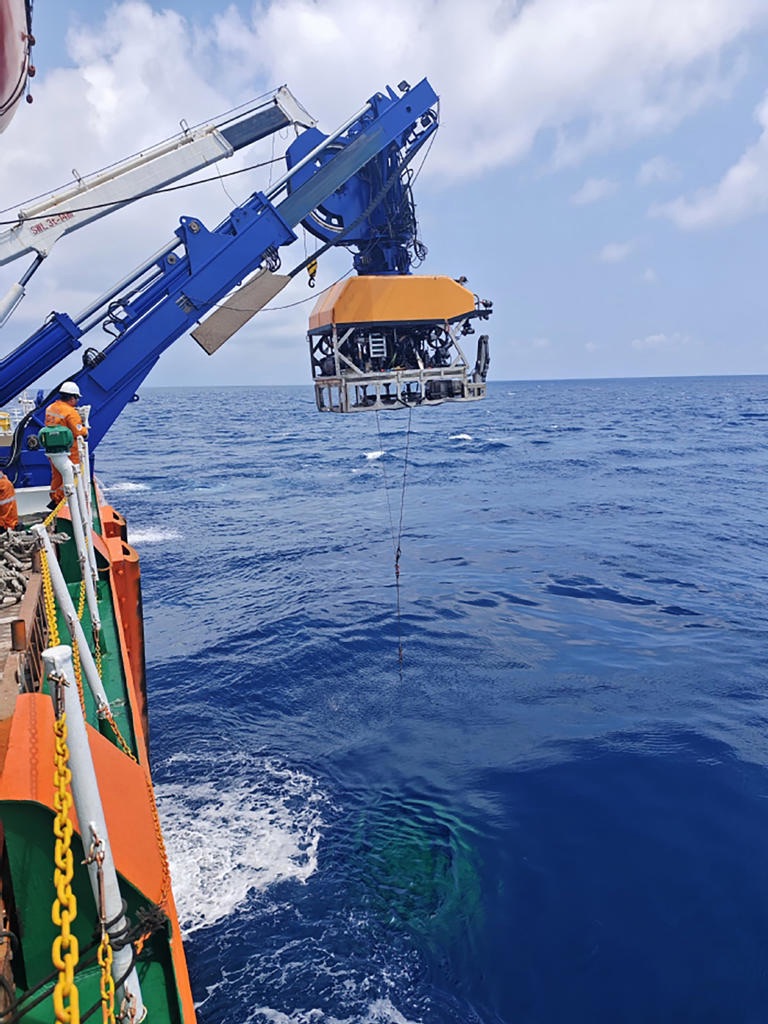
The “Haiyang Dizhi 2” research vessel completed its first deep-sea scientific mission of 2026 on Saturday, according to the Ministry of Natural Resources.
The expedition included a cutting test of a deep-sea electro-hydrostatic actuator at a depth of 3,500 metres (11,483 feet), using technology that has drawn attention for its potential military use.
“The sea trial has bridged the ‘last mile’ from deep-sea equipment development to engineering application,” the official China Science Daily reported on Saturday, suggesting the equipment was poised for actual deployment.
An electro-hydrostatic actuator, or EHA, integrates the hydraulic system, electric motor and control unit into a single compact device, eliminating the external oil piping typical of conventional systems.
The EHA represents a cutting-edge advance in power transmission technology, demanding high performance from motors, controls and structural design while delivering greater energy efficiency than older hydraulic systems.
The same technology is already used on commercial airliners to drive flight surfaces such as lifts.
The device tested in this expedition has been further equipped with deep-sea pressure compensation and corrosion resistance to perform precise mechanical tasks under extreme subsea pressure.